How I Rebuilt My Energy with Traditional Chinese Medicine
For years, I felt constantly drained—no matter how much I slept. After trying quick fixes that failed, I turned to traditional Chinese medicine for deeper body recovery. What I discovered wasn’t a miracle, but a powerful shift in how I listen to my body. This is my journey through real adjustments that brought lasting balance, and why it might be worth exploring for anyone feeling truly worn out.
The Breaking Point: When Fatigue Won
Chronic fatigue crept into my life slowly, like a shadow growing longer with each passing year. At first, it was just occasional tiredness—easily dismissed as the price of a busy schedule. I was raising children, managing a household, and staying connected to family needs. A cup of coffee here, an energy bar there—it seemed enough. But over time, the exhaustion deepened. I would sleep eight hours and wake up feeling as if I hadn’t rested at all. My muscles ached without cause, my focus wavered, and even simple tasks like folding laundry felt overwhelming.
I tried everything modern convenience promised. I took B12 supplements, switched to sugar-free energy drinks, and even experimented with intermittent fasting, hoping to reset my metabolism. I bought expensive vitamins marketed for 'energy support' and followed trendy wellness plans. But none of it worked for long. The energy spikes were brief, followed by sharper crashes. I felt like a machine running on low voltage, patched together with temporary fixes that didn’t address the core issue. The body, I began to realize, wasn’t designed to be overridden—it needed understanding.
The turning point came one winter morning when I canceled plans with a close friend—not out of disinterest, but because getting dressed felt like climbing a mountain. That moment shook me. I wasn’t just tired; I was depleted. I began to question whether I had been treating symptoms instead of causes. It was then that I started researching holistic approaches, not out of desperation, but out of a quiet determination to reclaim my vitality. I wanted to heal from within, not mask the signals my body was sending. This led me to traditional Chinese medicine—a system not focused on quick corrections, but on long-term harmony.
Discovering TCM: More Than Herbs and Needles
My first encounter with traditional Chinese medicine (TCM) was not in a clinic, but in a library book borrowed on a whim. I expected something mystical or overly complex, but what I found was a coherent framework for understanding the body as an interconnected system. TCM isn’t just about acupuncture or herbal formulas; it’s a complete philosophy of health rooted in balance, rhythm, and awareness. The more I read, the more I saw reflections of my own experience in its principles—especially the concept of Qi.
Qi, often translated as 'vital energy,' is the animating force that flows through the body. In TCM, health is not merely the absence of disease, but the smooth, balanced movement of Qi through pathways called meridians. When Qi becomes blocked, deficient, or excessive, symptoms arise—not as random malfunctions, but as messages. Fatigue, for instance, is not simply a lack of sleep; it may signal Qi deficiency, particularly in the Spleen and Kidney systems, which in TCM govern energy production and long-term resilience.
Another foundational idea is the balance of Yin and Yang—opposing yet complementary forces. Yin represents rest, nourishment, and internal repair, while Yang embodies activity, warmth, and outward expression. Modern life, with its constant demands and screen-filled evenings, often overstimulates Yang and depletes Yin. This imbalance, TCM teaches, is a primary driver of chronic exhaustion. Rather than suppressing symptoms, TCM seeks to restore equilibrium by addressing lifestyle, diet, emotions, and environment together.
What resonated most was that TCM views the body not as a collection of isolated parts, but as a dynamic whole. A sleep issue might be linked to the Liver’s inability to store blood at night; digestive discomfort could reflect a weakened Spleen Qi. This pattern-based diagnosis felt more intuitive than the symptom-by-symptom approach I had followed before. It wasn’t about labeling a condition, but about understanding the underlying rhythm of my body. This shift in perspective was the first step toward real recovery.
Understanding Body Recovery the TCM Way
In Western health models, recovery is often framed as repair—like fixing a broken machine. Rest, protein, and hydration are tools to mend wear and tear. While these are important, TCM expands the definition of recovery to include energetic and emotional restoration. True recovery, in this view, is not just physical rest, but the reestablishment of internal harmony. It’s about creating conditions where the body can naturally regulate itself, rather than being pushed or propped up.
One of the most transformative insights was learning that TCM doesn’t treat fatigue as a standalone issue. Instead, it looks for patterns. For example, someone who feels tired after meals may have Spleen Qi deficiency, where the digestive system struggles to convert food into usable energy. Another person who wakes repeatedly between 1–3 a.m. might have Liver Qi stagnation, often tied to stress and emotional tension. These patterns are identified through observation, pulse reading, and detailed questioning—not just blood tests or scans.
This approach is preventive and personalized. While Western medicine excels in acute care and diagnostics, TCM focuses on subtle shifts before they become full-blown conditions. It asks: What is the body trying to tell us? Why is energy low? Is it due to overwork, poor diet, emotional strain, or disrupted sleep cycles? By addressing the root pattern, not just the symptom, TCM supports sustainable healing. Recovery becomes less about 'bouncing back' and more about living in alignment with the body’s natural needs.
For me, this meant shifting from a mindset of 'pushing through' to one of 'listening deeply.' I began to see fatigue not as a personal failing, but as a signal that my lifestyle was out of sync with my physiology. The body wasn’t broken—it was asking for balance. This change in attitude reduced the guilt I once felt about needing rest. Instead of fighting my limits, I started honoring them. And in that space of acceptance, healing began.
My Daily TCM Adjustments: Small Shifts, Real Results
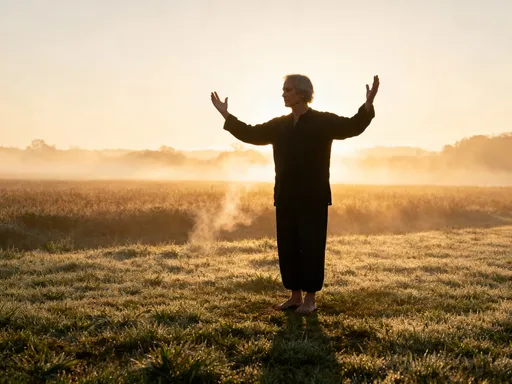
Integrating TCM into daily life didn’t require dramatic changes—just consistent, mindful choices. The first practice I adopted was the morning Qi self-check. Upon waking, I would place a hand on my lower abdomen, take three slow breaths, and notice how I felt—was my energy scattered or centered? Was my breath shallow or deep? This simple ritual grounded me and helped me tune in before the day’s demands took over. Over time, I became more aware of how my energy fluctuated and what influenced it.
I also began incorporating acupressure into my routine. One of the most effective points for fatigue is Zusanli (ST36), located below the kneecap. Massaging this point for a few minutes each day, especially when feeling drained, helped boost my stamina. Another key point is Neiguan (PC6), on the inner forearm, which supports calm and reduces mental fatigue. These techniques required no special tools—just a few quiet moments and a willingness to engage with my body directly.
In the evenings, I started a meridian massage practice. Using gentle strokes along the arms and legs, following the flow of major meridians, I noticed improved circulation and deeper relaxation. I would often pair this with warm sesame oil, which TCM considers nourishing for the Blood and Yin. These rituals weren’t time-consuming—ten to fifteen minutes max—but they created a sense of daily rhythm and care. They became anchors in my day, moments of connection rather than obligation.
The results emerged gradually but steadily. Within weeks, my sleep quality improved. I stopped waking up at 3 a.m. with a racing mind. My mood stabilized—I felt less reactive and more present. Most notably, the mid-afternoon energy crashes that once derailed my productivity became rare. I wasn’t suddenly hyper-energetic, but I had a more even, sustainable vitality. I could engage with my family without feeling drained afterward. These changes weren’t flashy, but they were profound in their consistency.
Food as Foundation: Eating with the Seasons
In TCM, diet is not just about nutrition—it’s medicine. The foods we eat directly influence Qi, Blood, and organ function. One of the most impactful shifts I made was aligning my meals with seasonal rhythms. TCM teaches that each season corresponds to specific organs and energetic qualities. Winter, for example, is linked to the Kidneys and calls for warming, nourishing foods like soups, stews, and root vegetables. Summer, tied to the Heart, benefits from cooling foods like cucumbers, melons, and leafy greens.
I used to eat the same breakfast year-round—cold cereal with milk, sometimes a smoothie. But TCM views raw and cold foods as taxing on the Spleen Qi, especially in colder months. I switched to warm, cooked meals like congee (rice porridge) with ginger and scallions in winter, and lighter steamed grains with vegetables in summer. The difference in digestion was immediate—less bloating, more consistent energy. I also began eating larger meals earlier in the day, in line with the body’s natural digestive peak around noon.
Another key principle is the balance of warming and cooling foods. TCM doesn’t label foods as 'good' or 'bad,' but considers their thermal nature. For instance, bananas and yogurt are cooling, while oats and cinnamon are warming. If I felt fatigued and cold, I’d add more warming ingredients. If I was tense or overheated, I’d include cooling foods. This wasn’t about strict rules, but about responsiveness. I learned to eat according to how I felt, not just what was convenient.
Emotional eating also came into focus. TCM recognizes that the Spleen is affected by overthinking, and the Liver by anger or frustration. When I noticed myself reaching for snacks not out of hunger but stress, I paused and asked: What do I really need? Often, a short walk or a cup of calming tea like chrysanthemum or rose was more nourishing than food. This shift helped me break the cycle of emotional fatigue masked as hunger. Eating became an act of care, not compensation.
Working with Nature, Not Against It
One of the deepest lessons from TCM is the importance of living in rhythm with natural cycles. The body has its own internal clock, known as the circadian rhythm, which TCM maps in two-hour increments across the day—each linked to a specific organ’s peak activity. For example, the Lung governs 3–5 a.m., the Stomach 7–9 a.m., and the Heart 11 a.m.–1 p.m. Aligning daily activities with these rhythms can enhance energy and recovery.
I used to burn the midnight oil, answering emails late into the night. But TCM warns that staying awake past 11 p.m. taxes the Gallbladder and Liver, organs responsible for decision-making and detoxification. I began setting a bedtime of 10:30 p.m., even on weekends. At first, it felt restrictive, but within weeks, I noticed deeper sleep and clearer mornings. I also started waking with the sun, opening the curtains immediately to signal my body it was time to rise. These small adjustments aligned me with the natural light-dark cycle, reducing mental fog.
Seasonal transitions also became part of my routine. In spring, I focused on gentle detox—eating more greens, reducing heavy foods, and moving my body daily to support Liver Qi flow. In autumn, I turned inward, prioritizing rest and lung-supporting foods like pears and white fungus. I stopped resisting the slower pace of winter and instead embraced it as a time for restoration. This didn’t mean doing less out of guilt, but honoring the season’s invitation to conserve energy.
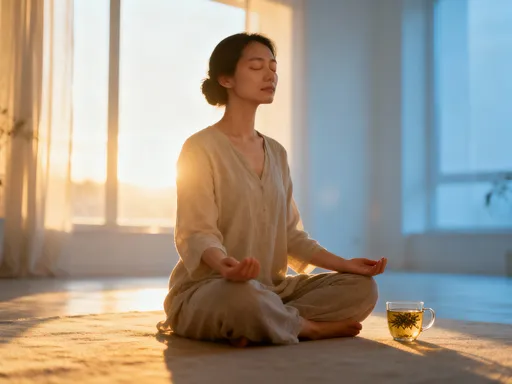
Mental strain was another area where I learned to yield. TCM teaches that excessive thinking, worry, and multitasking deplete Spleen Qi. I began scheduling 'mental rest' periods—times when I stepped away from screens, lists, and planning. During these breaks, I might sit quietly, brew tea, or walk in nature. These pauses weren’t unproductive—they allowed my mind to reset. Over time, I became more focused during work hours because I wasn’t running on constant mental overload. By working with my body’s natural rhythms, not against them, I preserved my energy rather than depleting it.
Why This Isn’t a Cure-All—But a Lifelong Practice
It’s important to be honest: TCM is not a quick fix or a guaranteed solution for everyone. It requires patience, self-awareness, and a willingness to slow down. Results don’t come overnight. For me, it took three months before I noticed consistent changes, and even now, I continue to learn and adjust. There are still days when I feel tired, especially during busy family periods or seasonal shifts. But now, I have tools to respond—not with frustration, but with care.
Another limitation is the need for professional guidance. While self-care practices like acupressure and dietary changes are accessible, a qualified TCM practitioner can provide personalized diagnosis and treatment. Herbal formulas, for example, should be tailored to individual patterns and monitored over time. I worked with a licensed herbalist who helped me identify my constitution and adjust my regimen accordingly. This partnership was crucial—it prevented guesswork and ensured safety.
TCM also isn’t about perfection. It’s about consistency and intention. Some days, I eat cold food in winter. Some nights, I stay up late. But the framework gives me a compass, not a rigid rulebook. When I stray, I can return with awareness. The goal isn’t to eliminate fatigue entirely—that’s part of being human—but to build resilience so that recovery is quicker and deeper.
In the end, this journey has been less about fixing my body and more about reconnecting with it. TCM taught me to listen, to honor, and to respond with kindness. Body recovery, I’ve learned, is not a destination, but an ongoing conversation—one rooted in respect, not force. For any woman feeling worn out, overwhelmed, or simply disconnected from her energy, this path may not be easy, but it is deeply rewarding. It’s not about doing more. It’s about being present, aligned, and gently, steadily, coming back to yourself.