How I Survived an Unemployment Crisis — A Pro’s Risk Check You Can’t Ignore
Losing my job hit harder than I expected—not just emotionally, but financially. I realized too late that I hadn’t truly assessed my risks. What followed was a mix of panic, poor choices, and eventual clarity. This is the real story of how I navigated that storm, what I learned about financial risk from a professional standpoint, and the practical steps that actually worked when the paycheck stopped. It wasn’t about luck or last-minute miracles. It was about structure, discipline, and a mindset shift that turned fear into focus. What started as a crisis became one of the most transformative financial lessons of my life—a lesson not in wealth creation, but in resilience, preparation, and control.
The Day Everything Changed
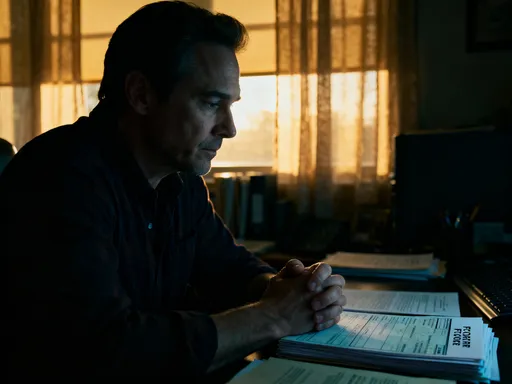
The email arrived at 10:17 a.m. on a Tuesday—subject line: "Important Update Regarding Your Employment." I opened it while sipping coffee, expecting routine HR communication. Instead, I read the words that changed everything: "Your position has been eliminated." It wasn’t personal, the message said. Restructuring. Efficiency. Industry shifts. Corporate language softened the blow, but the reality was sharp. In one moment, my primary income vanished. No final project. No farewell meeting. Just silence where certainty used to be.
Emotionally, I was unprepared. I had worked at the company for nearly eight years. I’d built systems, mentored new hires, and contributed to growth. Yet none of that mattered in the face of organizational change. What hit me next was the financial weight. I began calculating immediately: How long would my savings last? Could I cover the mortgage? What about health insurance? The questions piled up faster than answers. I pulled out a notepad and started listing numbers—bank balance, monthly expenses, upcoming bills. Within an hour, I felt the first wave of panic. I called a close friend, voice shaking, and admitted I didn’t know what to do.
But panic doesn’t pay bills. I knew I needed to shift from reaction to strategy. That night, I made a decision: I would treat this not as a personal failure, but as a financial emergency requiring professional-level assessment. I stopped asking "Why me?" and started asking "What now?" This mental pivot was crucial. Instead of spiraling into helplessness, I began to see the situation as a problem with solvable components. I didn’t need motivation—I needed a framework. And that framework would be rooted in risk assessment, a concept I had studied in finance but never applied to my own life until it was too late.
Why Risk Assessment Matters More Than Emergency Funds
Most financial advice centers on the emergency fund: save three to six months of living expenses. It’s sound guidance, and I had followed it—partially. I had about four months’ worth of expenses in a high-yield savings account. But when the job loss came, I realized something unsettling: knowing I had savings wasn’t the same as knowing how to use them. Without a clear understanding of my financial exposure, the fund became a comfort blanket rather than a strategic tool. I didn’t know which expenses to cut first, how long I could sustain reduced income, or when I might need to make irreversible decisions like selling my car or moving.
Risk assessment changed that. It’s the process of identifying, analyzing, and prioritizing potential financial threats before they materialize. Unlike an emergency fund, which is a financial reservoir, risk assessment is the map that tells you where and when to use the water. It forced me to confront uncomfortable truths: my "fixed" expenses weren’t all essential; my income assumptions were overly optimistic; and my job search timeline was unrealistic. By evaluating my vulnerabilities systematically, I could allocate my savings wisely instead of burning through them reactively.
For example, I discovered that 30% of my monthly spending went toward discretionary services—subscriptions, dining, and convenience purchases. Cutting those immediately extended my runway by nearly two months. More importantly, I identified which debts carried the highest penalties for late payment and prioritized those. I also assessed the likelihood and impact of various scenarios: What if I found part-time work in 60 days? What if it took six months? This wasn’t about predicting the future—it was about preparing for multiple versions of it. Risk assessment didn’t eliminate uncertainty, but it reduced my exposure to its worst effects. It transformed me from a passive victim of circumstance to an active manager of my financial fate.
Mapping Your Financial Exposure
I began by creating a comprehensive list of every financial obligation. Rent, utilities, car payment, insurance premiums, credit card minimums, student loan payments, grocery estimates, even pet care—nothing was too small to include. I then categorized each item by two criteria: urgency and flexibility. Urgency referred to how soon a missed payment would trigger consequences—like eviction or service disconnection. Flexibility measured how much I could reduce or eliminate the cost without severe lifestyle disruption.
Rent was high urgency and low flexibility. I couldn’t negotiate it easily, and missing a payment risked legal action. Streaming subscriptions, on the other hand, were low urgency and high flexibility—I could cancel them immediately with no long-term penalty. This matrix allowed me to prioritize actions. High-urgency, low-flexibility items became non-negotiables. I would protect those at all costs. Low-urgency, high-flexibility expenses were the first to go. I cut three streaming services, paused my gym membership, and switched to a cheaper phone plan, saving over $150 per month.
Next, I projected income scenarios. I estimated how much I could earn from freelance consulting, part-time remote work, or temporary assignments. I didn’t assume full-time reemployment within 30 days—that was wishful thinking. Instead, I built three models: optimistic (steady income within two months), moderate (intermittent work over four to five months), and pessimistic (no income for six months). For each, I calculated how long my savings would last. The pessimistic model showed I’d run out of funds by month seven. That was unacceptable. So I adjusted the variables: Could I reduce housing costs? Could I monetize a skill quickly? The exercise wasn’t meant to depress me—it was meant to expose weaknesses so I could strengthen them.
This process mirrored professional portfolio risk modeling, where investors stress-test assets against market shocks. I treated my personal finances as a portfolio of income streams and liabilities. By mapping exposure, I identified my break points—the moment when cash inflow no longer covered essential outflows. That knowledge was power. It allowed me to make proactive cuts, seek assistance early, and avoid last-minute crises. More than budgeting, this was financial triage—allocating limited resources where they were most needed.
Income Diversification: Not a Luxury, a Necessity
Before my job loss, I had one primary income source: my salary. I viewed side gigs as optional—something for extra vacation money or holiday shopping. I never considered that relying on a single employer was the financial equivalent of investing all your savings in one company’s stock. When that stock crashes, your entire portfolio collapses. The same principle applies to income. A single employer dependency creates maximum vulnerability. One decision, one restructuring, one industry shift—and you’re exposed.
Once I accepted this, I shifted my mindset. Income diversification wasn’t about getting rich—it was about survival. I began exploring every possible channel to generate cash flow, no matter how small. I registered on freelance platforms, offering project management and business writing services. I reached out to former colleagues and offered consulting at reduced rates to build testimonials. I even revived an old skill—graphic design—and created simple logos for small businesses on weekends. None of these paid large amounts initially, but collectively, they created a safety net.
The psychological benefit was just as important as the financial one. Every small payment reminded me I wasn’t powerless. I wasn’t waiting for a miracle—I was creating options. Over three months, these side efforts grew from $200 per month to over $800. That wasn’t replacement income, but it covered groceries, utilities, and half my car payment. More importantly, it reduced the pressure to accept the first job offer, even if it was underpaid or misaligned with my career goals. I could afford to be selective because I wasn’t completely dependent on a single outcome.
Diversification also changed how I viewed work. I stopped seeing employment as the only path to income. I began to think in terms of value exchange: What skills do I have? Who needs them? How can I deliver them flexibly? This mindset shift laid the foundation for long-term resilience. Even now, with stable employment, I maintain two side income streams. Not because I need the money, but because I never want to be that vulnerable again. Financial security isn’t about having a job—it’s about having options.
The Hidden Risks Nobody Talks About
When most people think of financial risk during unemployment, they focus on rent, food, and utilities. But there are deeper, slower-burning threats that can do long-term damage. I learned this the hard way. After three months of job searching, I missed a credit card payment by 12 days. It seemed minor at the time—I was waiting on a freelance payout—but it dropped my credit score by 47 points. That single lapse affected my ability to refinance student loans and increased the interest rate on a future auto loan. The cost wasn’t just the late fee—it was years of higher borrowing costs.
Another hidden risk was health coverage. My employer-sponsored plan ended after two months of COBRA, which I couldn’t afford long-term. I switched to a marketplace plan, but the deductible was high, and I delayed necessary medical visits. A minor dental issue became a costly root canal because I waited too long. I also underestimated the career depreciation risk. The longer I stayed out of the workforce, the harder it was to re-enter. Employers began asking why there was a gap. My skills, while still relevant, needed updating. I wasn’t falling behind, but I wasn’t moving forward either.
These risks don’t show up in a monthly budget, but they compound silently. To address them, I prioritized credit protection by setting up automatic minimum payments on all accounts, even if I had to cut other expenses to fund them. I secured a low-cost health clinic for essential care and used telehealth services for consultations. I also dedicated five hours per week to upskilling—taking online courses in data analysis and digital marketing. These weren’t immediate income generators, but they preserved my long-term employability.
The lesson was clear: financial risk isn’t just about cash flow. It’s about protecting your future self. Your credit score, health, and skills are assets just like savings or investments. They require maintenance, especially during crises. Ignoring them for short-term relief can lead to long-term setbacks. A true risk assessment looks beyond the present month and considers the next year, the next five years, and the stability of your earning potential over time.
Building a Personal Risk Dashboard
To stay in control, I created a personal risk dashboard—a simple spreadsheet that tracked key financial and emotional indicators. It had four main sections: cash flow, job search progress, skill development, and well-being. Each week, I updated the numbers. Cash flow showed my remaining savings, projected burn rate, and side income trends. Job search progress tracked applications sent, interviews secured, and follow-ups completed. Skill development logged hours spent learning and certifications pursued. Well-being included sleep quality, exercise frequency, and stress levels on a 1–10 scale.
This dashboard became my decision-making compass. When I felt pressured to accept a low-paying contract job out of fear, I checked the data. My savings still had a five-month runway, and my freelance income was growing. The numbers gave me permission to wait. When I felt discouraged by rejections, I reviewed my job search metrics and saw progress—15 interviews in eight weeks wasn’t failure; it was momentum. The dashboard removed emotion from critical choices and replaced it with evidence.
It also helped me identify patterns. I noticed that weeks with more exercise and better sleep correlated with higher productivity and more job offers. So I protected those habits, even when time was tight. I didn’t view self-care as indulgence—it was part of risk mitigation. A burned-out job seeker makes poor decisions. A healthy, focused one stays resilient.
The dashboard didn’t require advanced software or financial modeling. It was a practical, low-tech tool that brought clarity. Today, I still maintain a simplified version, even in stable times. It reminds me that financial health isn’t static—it requires ongoing monitoring. Just as a pilot checks instruments during smooth flight, I review my dashboard monthly to catch small issues before they become emergencies.
From Crisis to Control: Lessons That Stick
Looking back, the job loss was one of the most painful experiences of my professional life. But it was also one of the most valuable. It forced me to confront financial habits I had ignored for years—overreliance on a single income, underestimating hidden risks, and treating emergency savings as a finish line rather than a starting point. The crisis didn’t just teach me how to survive—it taught me how to prepare.
The real transformation was internal. I developed a mindset of continuous risk assessment. I no longer wait for emergencies to evaluate my finances. I review my exposure quarterly: updating my budget, stress-testing my income scenarios, and ensuring my skills remain relevant. I’ve also increased my emergency fund to eight months of expenses and diversified my income through consulting and digital products. These aren’t reactions to past trauma—they’re proactive habits of resilience.
Financial security isn’t the absence of risk. It’s the ability to face it with clarity and control. I used to believe stability came from having a job. Now I know it comes from having a plan. The tools I developed during unemployment—risk mapping, income diversification, credit protection, and personal dashboards—are not just for crises. They are for life. They’ve made me more confident, more adaptable, and more in control of my future.
If there’s one lesson I hope others take from this, it’s this: Don’t wait for a crisis to assess your risks. Do it now, while you still can. Run the numbers. Map your exposure. Build your buffers. Because financial peace isn’t found in perfect conditions—it’s found in preparation. And preparation, more than any bank balance, is the true foundation of security.